-
Representative sample
Use the actual alloy and heat treat, not a practice bar of milder steel. If the envelope is limited by turret interference, photograph the jaws and the longest tool together so bidders cannot hide a collision in a brochure drawing.
-
Demonstration
Record spindle speed, feed, depth of cut, coolant pressure and whether the part is supported by a tailstock or a sub-spindle. Live-tool milling or drilling that is claimed inside the same cycle must be shown on that sample, not deferred to “available options”.
-
Acceptance record
Keep the inspection plan next to the quote so a shorter cycle that skips a groove or a thread is not scored as cheaper. Tool-life minutes and insert grade are assumptions, not a certified process until the buyer’s quality group accepts them.
Independent machinery sourcing · Integration
Cnc lathe quotes start from the workholding envelope
Cnc Lathe Sourcing is an independent sourcing partner. Share chuck size, bar capacity, spindle speed, quantity and destination so factories quote a dedicated cnc lathe against the same workpiece, not a catalog family name. We do not manufacture machines or hold inventory.
Request Factory Quotes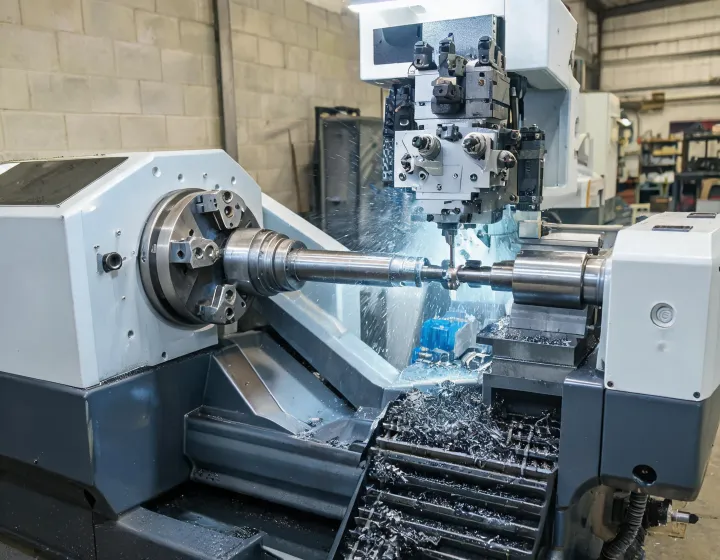
Trial sequence
-
Representative sample
Send the longest bar, the heaviest chucked blank and the tightest diameter that must run on the first machine. State whether the job is bar fed or individually chuck loaded, and whether live tooling or a second setup is planned for features that a turning pass cannot finish.
-
Demonstration
Ask each bidder to run that sample with the proposed jaws and turret stations installed. Capture tool-life assumptions, coolant concentration, spindle speed in rpm and connected load. Nameplate horsepower is not a cycle-time guarantee unless those conditions sit next to the number.
-
Acceptance record
Write the inspection method, sample size and pass criteria before comparing two cnc lathe replies. FAT/SAT attendance, spare parts kits and training remain separate lines unless the factory includes them in writing.
Product changeover questions
A cnc lathe RFQ is comparable only after bidders use the same split between the base machine, first-contact workholding, and work that stays with the plant. Changing from a bar job to a chucked forging is not a software toggle; it is a tooling, chip and restart question.
What changes between products?
Chuck jaws, collets, bar-feeder collets, turret stations, boring bars, grooving inserts and live-tool holders often change between SKUs. Record the largest swing, the longest bar stick-out and the smallest bore that must hold after the change. If two diameters share one jaw set, say so; if they do not, list extra jaw sets as separately quoted items rather than assuming they travel with the base machine.
What must be cleaned or replaced?
Chips packed in the chuck, coolant residue on guide bushings, and worn inserts on the first station are typical restart delays. Ask whether the quoted cell includes a chip conveyor routing that matches your pit or a tank that stays on the floor. Replacement of liners, seals and filters belongs in a wear-parts list, not in an unspoken commissioning promise.
How is the first good output verified?
State which diameters, lengths and surface-finish calls will be measured, at what elapsed time after the first cut, and who signs the record: plant quality, the machine builder, or a third-party inspector. Until that restart check is written, two cycle-time claims are not the same offer.
Turning trial that belongs in the first RFQ
Duty questions before factories size the spindle
Does the part fit with the proposed jaws and turret tooling installed?
- Material entering the machine
- Name the alloy, hardness, bar diameter or chucked blank envelope, and whether scale, saw-cut ends or forging flash will enter the first station. Feedstock questions belong in the RFQ, not in a later “site survey” that rewrites the quote.
- Required output
- Write pieces per shift on that sample with the inspection delay included. Spindle rpm and connected load support the quote; they do not replace a throughput basis tied to the workpiece.
- Duty cycle
- State shifts per day, lights-out intent, and whether bar changes or chuck loads are the bottleneck. A two-shift cell and a one-shift cell are different utility and chip-handling problems even if the catalog model looks the same.
Which responsibilities remain with the equipment supplier and buyer?
The factory confirms machine feasibility, included tooling and written exclusions. The buyer confirms destination, quantity, three-phase supply, compressed air, cooling water, foundation and upstream/downstream interfaces. Cnc Lathe Sourcing restacks replies so those rows can be compared. We do not appoint factories, issue compliance certificates, or publish a savings percentage.